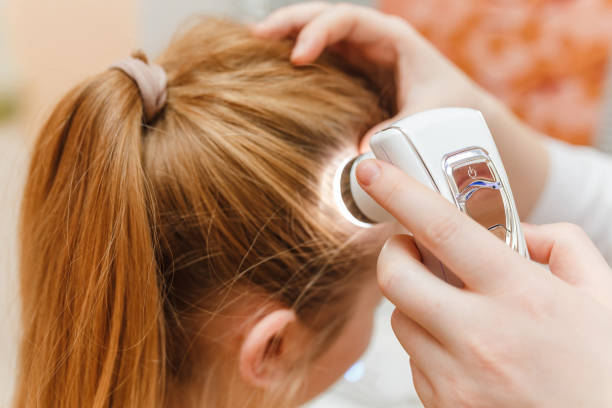
Low-Level Laser Therapy (LLLT) for Hair Loss: Does It Really Work?
Low-Level Laser Therapy (LLLT), sometimes called red light therapy, cold laser therapy or photobiomodulation, has become an increasingly popular treatment for men and women experiencing thinning hair.
From laser caps and helmets to in-clinic treatments, LLLT is widely marketed as a non-invasive way to stimulate hair growth. But does it live up to the claims, and is it worth investing in?
Here's what the current evidence says.
What Is Low-Level Laser Therapy?
Low-Level Laser Therapy uses red or near-infrared light to expose the scalp to low-energy laser wavelengths.Unlike surgical lasers, these devices don't generate heat or damage the skin. Instead, they're designed to deliver light energy that may stimulate cellular activity within the scalp and hair follicles.
LLLT has been used in medicine for a variety of purposes, including wound healing and tissue repair, before becoming a recognised option for certain types of hair loss.
Today, it's available both in specialist hair clinics and as home-use devices, including laser caps, helmets, combs and brushes.
How Does LLLT Work for Hair Loss?
The exact way LLLT works isn't fully understood, but researchers believe the light energy is absorbed by cells within the hair follicle.This may increase cellular energy production, improve blood circulation around the follicles and encourage hairs to remain in the active growth (anagen) phase for longer.
Rather than creating new hair follicles, the goal is to support follicles that are still alive but becoming weaker or producing progressively finer hairs.
For this reason, LLLT is generally considered most suitable for people experiencing early-stage hair thinning, rather than extensive baldness.
Does Low-Level Laser Therapy Actually Work?
Research into LLLT has produced encouraging results, although it's important to keep expectations realistic.A number of clinical studies have found improvements in hair density and hair thickness in men and women with androgenetic alopecia (male and female pattern hair loss). However, the degree of improvement varies considerably between individuals.
Some people notice thicker-looking hair after several months of consistent use, while others experience only modest changes or no obvious improvement.
Overall, the evidence suggests LLLT may help support hair growth in suitable candidates, but it should not be viewed as a guaranteed or stand-alone solution.
Who Is Most Likely to Benefit?
LLLT appears to work best for people who:- Have early-stage male or female pattern hair loss
- Still have active hair follicles
- Are experiencing gradual thinning rather than complete baldness
- Are prepared to use the treatment consistently over several months
People with long-standing bald areas or inactive follicles are generally less likely to see significant improvement.
How Long Does LLLT Take to Work?
Hair grows slowly, so patience is essential.Most manufacturers and clinics recommend using LLLT consistently for at least three to six months before assessing whether it's helping.
Many home devices are used for around 15 to 30 minutes, several times a week, although treatment schedules vary depending on the device.
If the treatment is effective, ongoing maintenance is usually required to help preserve the results.
Is LLLT Safe?
One of the biggest advantages of Low-Level Laser Therapy is its safety profile.When used correctly, LLLT is generally painless and has very few reported side effects. Some people experience mild scalp warmth or temporary irritation, but serious complications are uncommon.
As with any treatment, it's important to follow the manufacturer's instructions and seek professional advice if you have concerns or underlying scalp conditions.
How Much Does Low-Level Laser Therapy Cost?
The cost depends on whether you choose clinic-based treatment or a home device.Home-use laser caps, helmets, combs and brushes typically range from around £200 to £1,500, depending on the technology and brand.
Clinic-based treatment programmes often cost £1,000 to £3,000 or more, particularly when multiple sessions are recommended.
Before investing, it's worth considering that LLLT usually requires ongoing use to maintain any benefits.
Should You Try LLLT?
Low-Level Laser Therapy may be worth considering if you're in the early stages of hair thinning and are looking for a non-invasive treatment with a good safety record.However, it's important to understand its limitations.
LLLT is unlikely to restore hair to completely bald areas, and results vary from person to person. It's best viewed as a treatment that may help support existing hair follicles rather than dramatically reverse hair loss.
Many hair restoration specialists recommend combining LLLT with other evidence-based approaches rather than relying on laser therapy alone.
Can You Combine LLLT With Other Hair Loss Treatments?
Yes. In fact, many people use Low-Level Laser Therapy alongside other hair restoration strategies.Depending on the underlying cause of hair loss, this may include medical treatments, lifestyle improvements, improved nutrition or targeted hair supplements.
One option is HR23+ Hair Growth Supplement, which has been formulated to support healthy hair in both men and women. Its formula combines carefully selected botanical extracts—including saw palmetto, nettle leaf, pumpkin seed (pepita) and horsetail—with targeted nutrients that support normal hair health.
While no supplement or device can guarantee hair regrowth, combining treatments that address different aspects of hair health may provide a more comprehensive approach than relying on a single therapy alone.
Low-Level Laser Therapy has become one of the most popular non-surgical treatments for hair loss, and research suggests it may help improve hair density and thickness in some people with early-stage thinning.
It's painless, generally safe and easy to use, but it's not a miracle cure. Results take time, ongoing treatment is usually required, and not everyone responds in the same way.
If you're considering LLLT, it's worth discussing your options with an experienced hair restoration specialist. Identifying the underlying cause of your hair loss remains the most important step in choosing the treatment that's most likely to work for you.
Ad.

Comments
Post a Comment